Flora family

Minor planets in the Flora family.

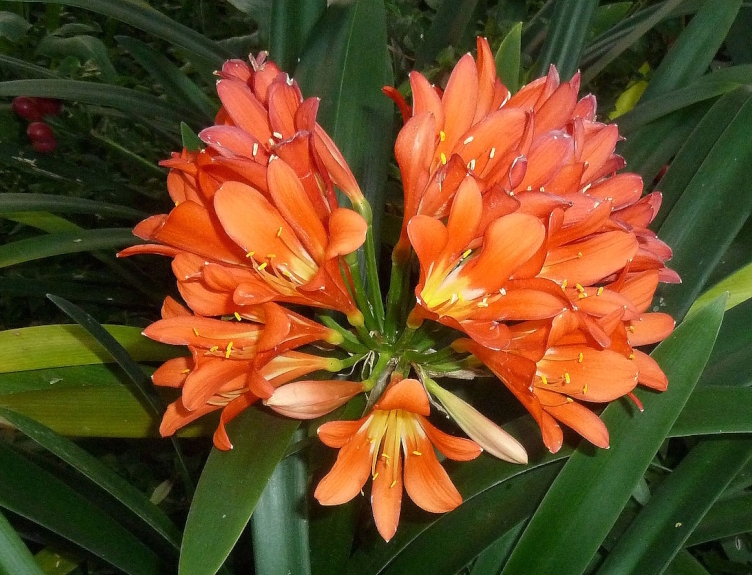
Clivia miniata (the natal or bush lily) photo detail showing bright orange flowers.
Asteroids, Flora family, Focus On, Inner main belt objects, Main belt objects, Pisces discovery

Focus On: (935) Clivia

Name origin: Genus of perennial flowering plants native to southern Africa, commonly called the natal or bush lily. They have green, long leaves and mainly bell-shaped flowers, with berry fruits. The genus itself is named after Charlotte Percy (née Clive), who first cultivated the plant in the U.K.

Focus On: (935) Clivia Read Post »

Heinrich Bruns (1848-1919), German mathematician and astronomer. Detail of greyscale portrait by painter Anton Eduard Klamroth.
Asteroids, Flora family, Focus On, Inner main belt objects, Main belt objects, Pisces discovery

Focus On: (901) Brunsia

Named in honour of Ernst Heinrich Bruns (1848-1919), a German mathematician and astronomer, who also contributed to the development of the field of theoretical geodesy (measurement of the Earth’s relative geometry, gravity and orientation over time). He was mainly engaged in developing the theoretical side of Earth’s shape.

Focus On: (901) Brunsia Read Post »

Snapshot of (831) Stateira's orbit and statistics at the approximate moment of discovery, from the JPL Small-Body Database.
Asteroids, Flora family, Focus On, Inner main belt objects, Main belt objects, Pisces discovery

Focus On: (831) Stateira

Stateira was a queen of ancient Persia who died about 400 BCE; wife of Artaxerxes II. She had a son, who became Artaxerxes III. She was a popular ruler, apparently because she talked to ordinary people, but did not get on well with her mother-in-law Parysatis, who eventually poisoned her.

Focus On: (831) Stateira Read Post »

Asteroids, Flora family, Focus On, Inner main belt objects, Main belt objects, Pisces discovery

Focus On: (641) Agnes

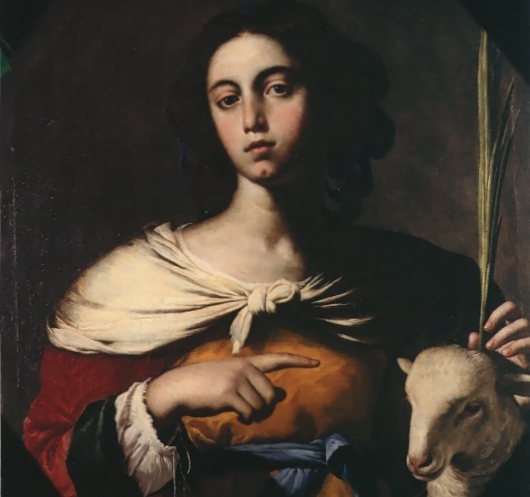
Name origin: Unknown. Agnes is a female given name derived from Greek, and meaning ‘pure’ or ‘holy’. The popularity of St. Agnes of Rome (c. 291-21 January 304) boosted wide use of the name, which became the third commonest for women in English-speaking countries for more than 400 years, peaking in the early 20th century. There are multiple variants.

Focus On: (641) Agnes Read Post »

Scroll to Top