
Focus On: (6235) Burney
Name origin: Venetia Phair (née Burney), who at age 11 was the first to suggest the name Pluto when said planet was discovered. She studied mathematics and became an accountant, and later a teacher.

Name origin: Venetia Phair (née Burney), who at age 11 was the first to suggest the name Pluto when said planet was discovered. She studied mathematics and became an accountant, and later a teacher.

Name origin: Important Egyptian underworld god, husband of Isis. Osiris was originally a local deity from Lower Egypt who may have been a personification of fertility in the chthonic realms. He evolved to represent both fertility and death/resurrection.

Name origin: Genus of perennial flowering plants native to southern Africa, commonly called the natal or bush lily. They have green, long leaves and mainly bell-shaped flowers, with berry fruits. The genus itself is named after Charlotte Percy (née Clive), who first cultivated the plant in the U.K.

Named in honour of Ernst Heinrich Bruns (1848-1919), a German mathematician and astronomer, who also contributed to the development of the field of theoretical geodesy (measurement of the Earth’s relative geometry, gravity and orientation over time). He was mainly engaged in developing the theoretical side of Earth’s shape.

Name origin: Fridtjof Wedel-Jarlsberg Nansen (1861-1930), a Norwegian polymath, Nobel Peace Prize laureate, explorer, scientist, diplomat and humanitarian. He led the team that first crossed the interior of Greenland, reached a record northern latitude exploring to the North Pole, studied zoology and oceanography, and worked with the League of Nations.

Stateira was a queen of ancient Persia who died about 400 BCE; wife of Artaxerxes II. She had a son, who became Artaxerxes III. She was a popular ruler, apparently because she talked to ordinary people, but did not get on well with her mother-in-law Parysatis, who eventually poisoned her.

Auravictrix is Latin for ‘victory against the wind’ (named for the first Schütte-Lanz zeppelin flights in 1911). The Schütte-Lanz company was an early competitor of the more famous airships built by Ferdinand von Zeppelin.

Name origin: Greek Naiad at Delphi who, to flee Apollo’s pursuit, threw (or transformed) herself into the sacred springs now bearing her name. The water from the springs bestowed the gifts of prophecy and poetry.
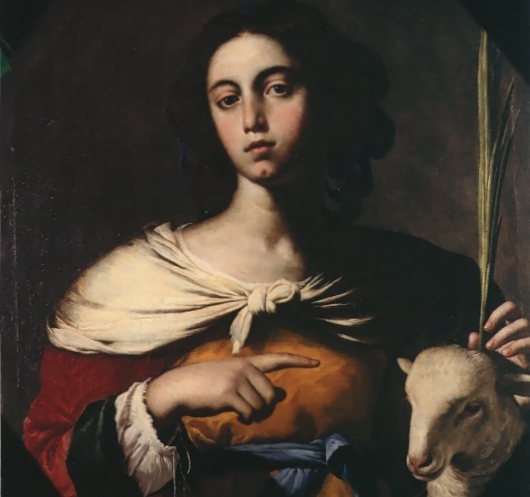
Name origin: Unknown. Agnes is a female given name derived from Greek, and meaning ‘pure’ or ‘holy’. The popularity of St. Agnes of Rome (c. 291-21 January 304) boosted wide use of the name, which became the third commonest for women in English-speaking countries for more than 400 years, peaking in the early 20th century. There are multiple variants.

The Pythia was the high priestess and oracle of the temple of Apollo at Delphi. Established by the 8th century BCE (though some sources date the shrine’s beginnings around 600 years farther back), the Pythia became pre-eminent by the 7th century BCE. Widely respected, the priestess continued to be consulted until the late 4th century CE.