
Basics
Class: S-type asteroid
Location: Main belt
Orbit length (approx): 4.61 years
Discovered: 9th February 1856, 00:57 UTC, from Paris, France, by Jean Chacornac
Notes: This asteroid may have a complex shape or it could be a binary system.
Events at time of discovery:
- February 2 – Dallas, TX, is incorporated as a city.
- February 5 – Birth of Frank Podmore, British psychical researcher
- February 21 – Birth of Maurycy Gottlieb, Ukrainian painter
Naming information
Name origin: Minor Roman goddess of gaiety
Mythology: Laetitia’s name derives from the root word laeta, meaning “happy”, “glad”, “lucky”, “successful”, “prosperous”, “luxurious”, “lush”, or “abounding”, referring to happiness with prosperity and abundance. Laetitia would be portrayed wearing a garland, as wreaths were generally worn at ceremonial events and festivals, to depict celebration and seasonal rites. She was sometimes depicted with an anchor, as a representation of stability, or (like Fortuna) a ship’s rudder, symbolising her guiding mortals to good fortune.
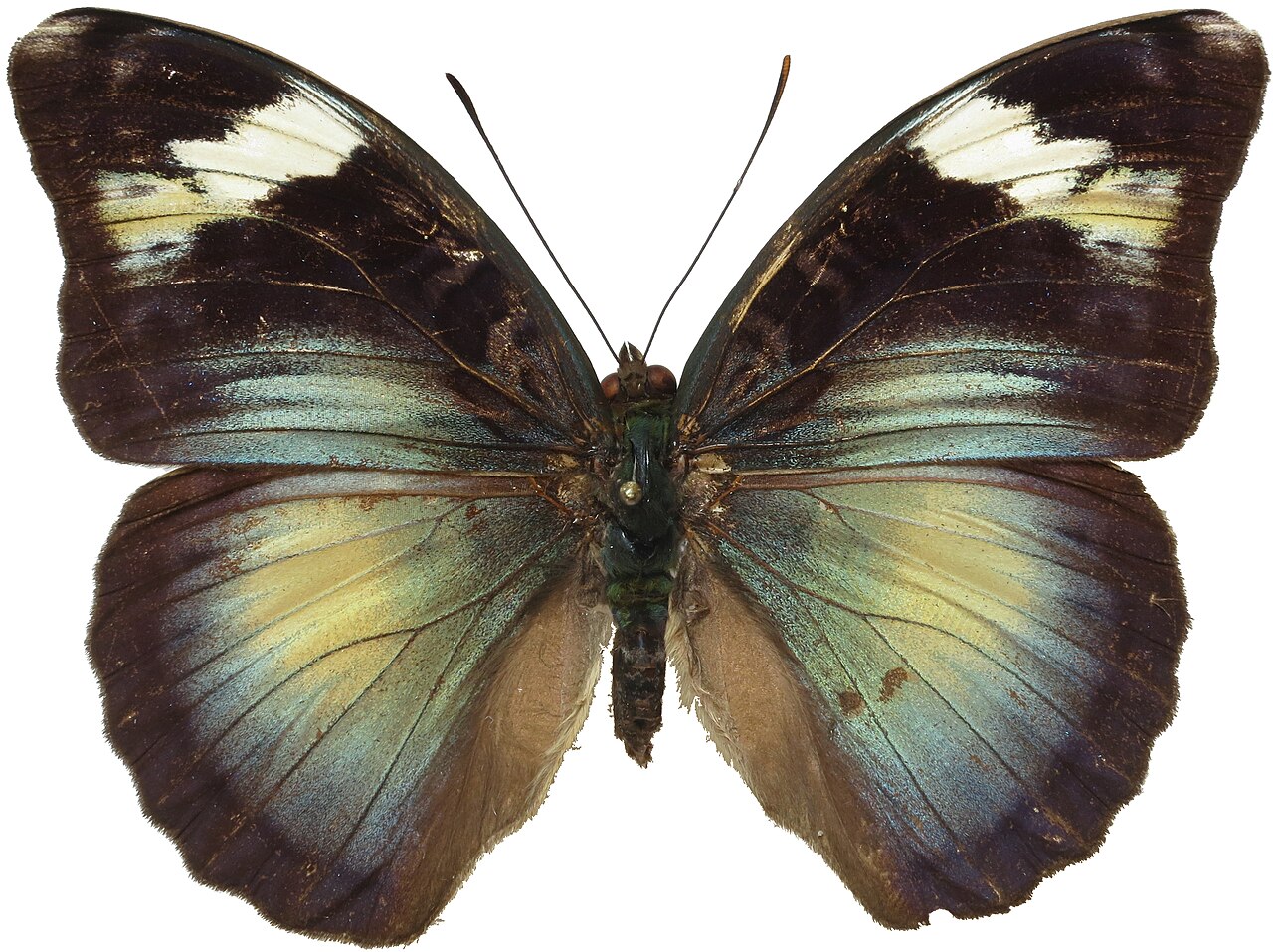 |
| Female Bebearia laetitia butterfly from Mbalmayo, Cameroon. Photo by Lsadonkey. |
Astrological data
Discovery degree: 19+ Virgo
Discovery Sabian: A Caravan of Cars Headed to the West Coast
Discovery nodal signature: Virgo–Pisces
Estimated orbital resonances: Mercury 1:19, Venus 2:15, Mars 6:13, Ceres 1:1, Jupiter 13:5, Saturn 19:3, Chiron 11:1
Discovery chart details: New phase chart. Stellium in Pisces; Mercury stationary. Moon was semi-sextile and Asbolus conjunct the North Node. Moon conjunct Vesta; Sun trine Mars and sesquiquadrate Nessus; Mercury-Eris on IC sesquiquadrate Mars, trine Nessus and sextile Chariklo. Venus sextile Jupiter; Jupiter semi-square and Saturn quincunx Pholus; Ceres semi-square Saturn. Neptune was semi-square Pluto and Chiron. Uranus descending.
Summary and references
May indicate a general positive attitude, potential sources of happiness, or possibly misplaced joy or unwise optimism[1]; alternatively, the discovery Sabian implies the role of co-operative effort in producing abundance. The similarity of orbit with (2) Pallas may suggest a place for wisdom and strategy also.
References:
1) James R. Lewis: The Astrology Book: The Encyclopedia of Heavenly Influences (Visible Ink Press, 2003)
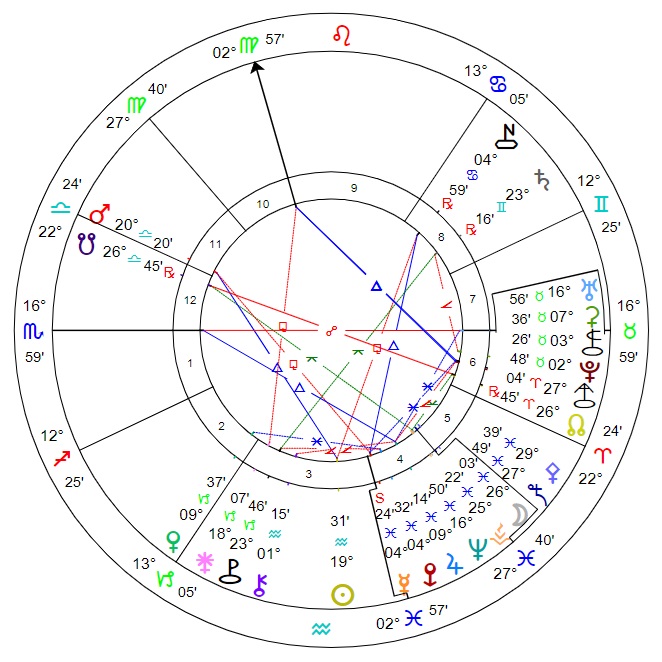 |
| Discovery chart for (39) Laetitia: 9th February 1856, 00:57 UTC, Paris, France. The asteroid is not depicted. |