
Basics
Class: S-type asteroid
Location: Inner main belt
Orbit length (approx): 3.73 years
Discovered: 17th February 1879 (time unknown), at the Austrian Naval Observatory (Pola, now Pula, Croatia) by Johann Palisa
Notes: Large asteroid with a mean radius likely above 90 km.
Events at time of discovery:
- January 28 – Birth of Betty Kuuskemaa, Estonian actress
- – Birth of Francis Picabia, French painter, poet
- February 3 – Mosley Street in Newcastle upon Tyne, U.K., becomes the world’s first public highway to be lit by the electric incandescent light bulb invented by Joseph Swan.
- February 8 – At a meeting of the Royal Canadian Institute, engineer and inventor Sandford Fleming first proposes the global adoption of standard time.
- February 13 – Birth of Sarojini Naidu, Indian independence activist and poet
Naming information
Name origin: Nausikaä was the young daughter of Alcinous and Arete in the Odyssey; she meets the shipwrecked Odysseus and aids him. She may afterwards have married his son Telemachus, and possibly had sons by him or by Odysseus himself.
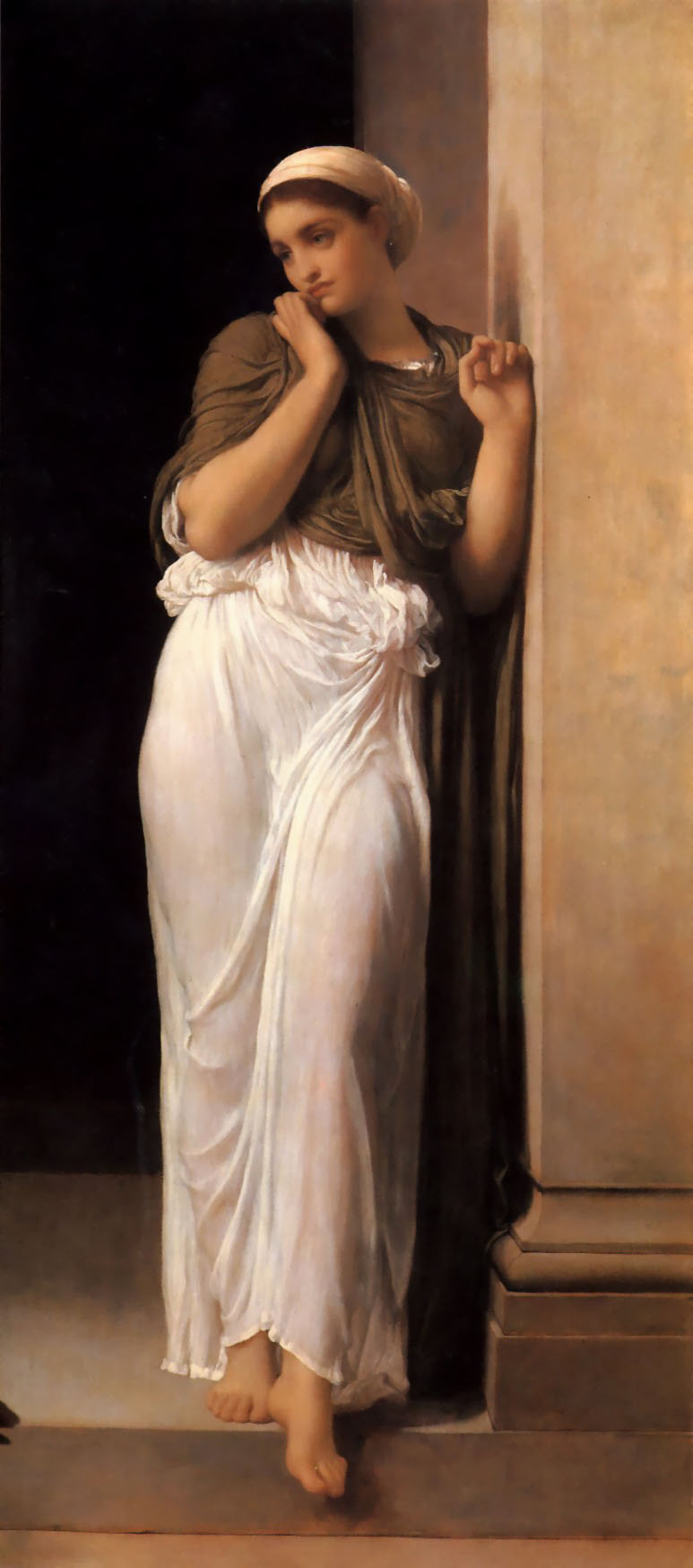 |
| Nausicaa (1878), oil on canvas painting by Frederic Leighton. |
Astrological data
Discovery degree: 16+ Virgo
Discovery Sabian: A Volcanic Eruption
Discovery nodal signature: Pisces–Virgo
Estimated orbital resonances: Venus 1:6, Earth 4:15, Mars 4:7, Ceres 16:13, Jupiter 16:5
Discovery chart details: Noon chart. Nausikaa was quincunx Mercury and opposite Venus. Chiron square the Nodes. Mars-Nessus opposite Vesta-Asbolus, trine Ceres and sesquiquadrate Pluto. Pallas conjunct Saturn. Stellia in Capricorn and Aquarius.
Summary and references
Mark Andrew Holmes interprets in terms of Nausikaa as the embodiment of hospitality[1]; additionally this asteroid might signify healing, sustenance, the capacity to see the divine within the mortal, initial impressions (which could stick) and courage.
References:
1) Mark Andrew Holmes: Nausikaa
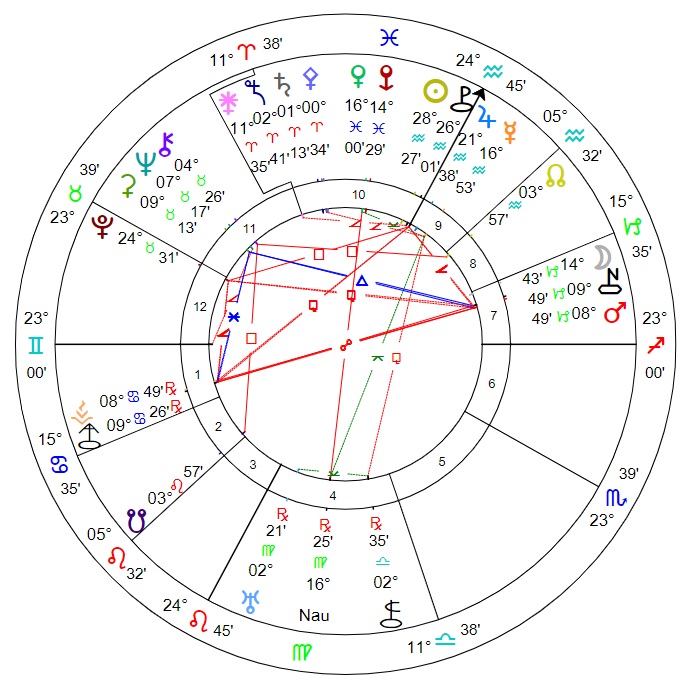 |
| Noon discovery chart for (192) Nausikaa: 17th February 1879, Pula, Croatia. |